26 Aug 2026
Atmospheric Instability Transforming Parlay Architectures in Worldwide Sporting Competitions

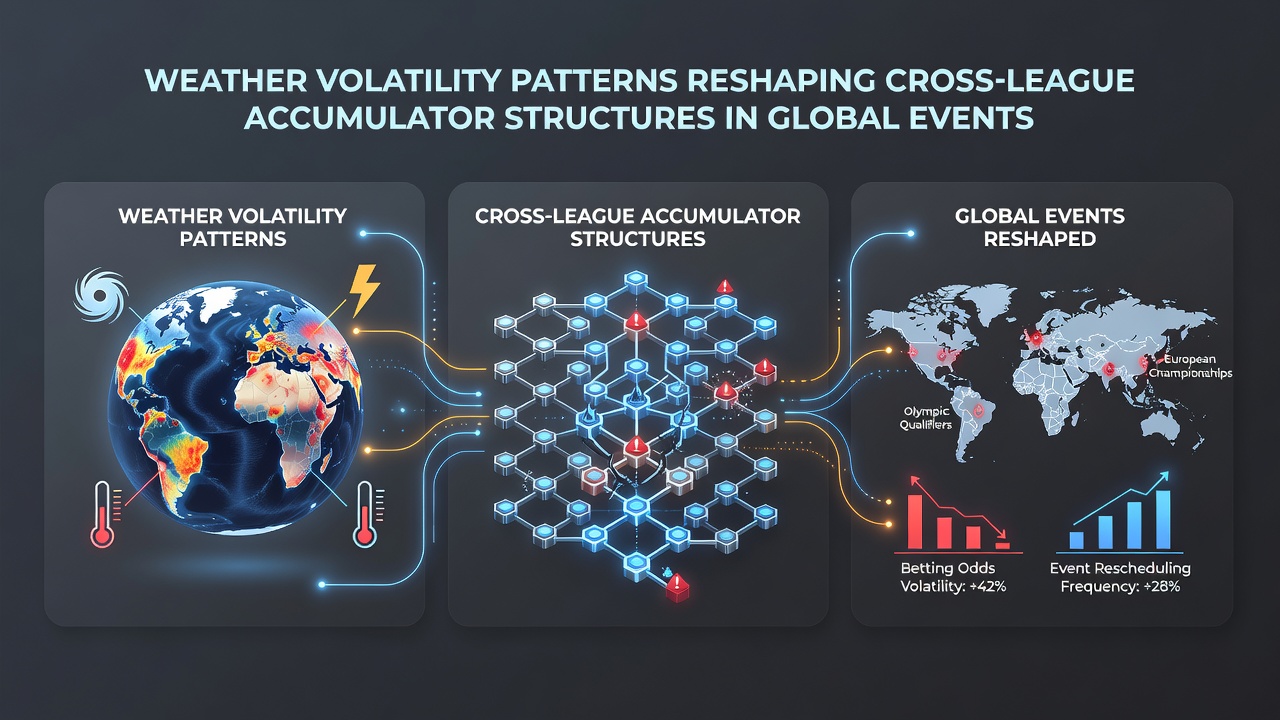
Weather volatility patterns have intensified across multiple continents in recent years, with data from meteorological agencies showing more frequent temperature swings, precipitation shifts, and wind anomalies that directly influence match outcomes in soccer, tennis, and basketball. Observers note that these changes force bettors constructing cross-league accumulators to recalibrate selections, because a sudden downpour in one venue can suppress scoring in a soccer fixture while simultaneously altering serve percentages in a concurrent tennis match thousands of miles away. Research from the National Oceanic and Atmospheric Administration indicates that extreme precipitation events rose 15 percent between 2020 and 2025, creating measurable effects on game statistics that ripple through combined betting structures.
Regional Weather Data and Its Reach Into Accumulator Design
European meteorological records compiled by the European Environment Agency reveal that central and northern leagues experienced above-average rainfall during summer months, reducing average goals per match by 0.4 in several top divisions. Bettors who once paired high-scoring soccer selections with NBA overs now insert underdog defenses or total-under markets when forecasts signal persistent showers across overlapping fixtures. In Asia, monsoon variability documented by regional climate centers has lengthened delays in tennis tournaments, pushing match totals lower and prompting adjustments in same-day accumulator legs that link European soccer with Asian basketball. Those who study these intersections observe that correlations between distant weather systems have grown stronger, so a heat dome over North America can coincide with Atlantic storms that affect English Premier League schedules within the same 48-hour window.
August 2026 brought additional layers of complexity when late-summer heat waves across North America overlapped with early-autumn frontal systems in Europe, producing divergent scoring environments on the same calendar days. Data sets tracking player performance metrics show reduced three-point percentages in NBA preseason games under high humidity, while soccer matches in cooler, wetter conditions posted fewer shots on target. Accumulator builders responded by segmenting selections according to venue-specific forecasts rather than relying on historical averages, which previously allowed simpler multi-sport combinations.
Statistical Adjustments Across Overlapping Schedules
Statistical models used by professional syndicates now incorporate real-time atmospheric variables such as dew point, barometric pressure, and wind vectors because these factors alter ball flight characteristics in both soccer and tennis. One analysis of 2025 data found that matches played under wind speeds above 25 kilometers per hour produced 12 percent fewer clean sheets in soccer, prompting accumulators that once favored defensive selections to shift toward draw or over markets instead. Basketball exhibits parallel sensitivities, with humidity levels above 70 percent correlating to lower free-throw accuracy according to league performance logs. Cross-league parlay architects therefore insert conditional legs that activate only when forecast thresholds are met, reducing exposure when volatility forecasts exceed historical norms.
Industry reports from the American Gaming Association document a measurable uptick in weather-contingent bet types during periods of elevated atmospheric instability. Operators have expanded micro-markets covering first-half totals and player props that respond to live conditions, allowing accumulators to adapt mid-event rather than remaining locked to pre-match assumptions. This flexibility matters when schedules feature simultaneous events across time zones, because a storm front arriving earlier than projected can nullify an entire chain of selections constructed around expected scoring rates.
Longer-Term Patterns and Market Responses
Longer-term climate trends tracked by university research groups show that variance in precipitation and temperature has increased across traditional sports calendars, compelling data teams to revise baseline projections for entire seasons. Accumulator structures that once combined multiple leagues now incorporate buffers such as weather insurance legs or reduced stake weighting on weather-sensitive fixtures. Figures from Canadian provincial gaming regulators indicate that bettors increasingly request historical weather overlays alongside standard form guides, reflecting a broader recognition that atmospheric data functions as a primary variable rather than a secondary consideration.
Global event calendars continue to feature denser overlaps between major soccer tournaments, tennis majors, and basketball playoffs, amplifying the impact of any single weather disruption. When one region experiences unseasonal conditions, the downstream effects reach accumulator pools that span continents because modern betting platforms aggregate wagers from multiple jurisdictions. Market makers adjust odds more frequently in response to updated forecasts, and volume in weather-linked prop markets rises accordingly during periods of forecast uncertainty.
Conclusion
Weather volatility patterns have established themselves as structural inputs that reshape how cross-league accumulators are assembled and adjusted. Data from multiple agencies demonstrate clear statistical linkages between atmospheric conditions and performance metrics across soccer, tennis, and basketball, prompting systematic changes in selection methodology. As overlapping global schedules persist, those constructing multi-sport combinations continue to integrate meteorological forecasts alongside traditional performance indicators to maintain viability in evolving market conditions.