17 May 2026
Coaching Transitions and Their Ripple Effects on Form Guides for Soccer and Basketball Accumulators
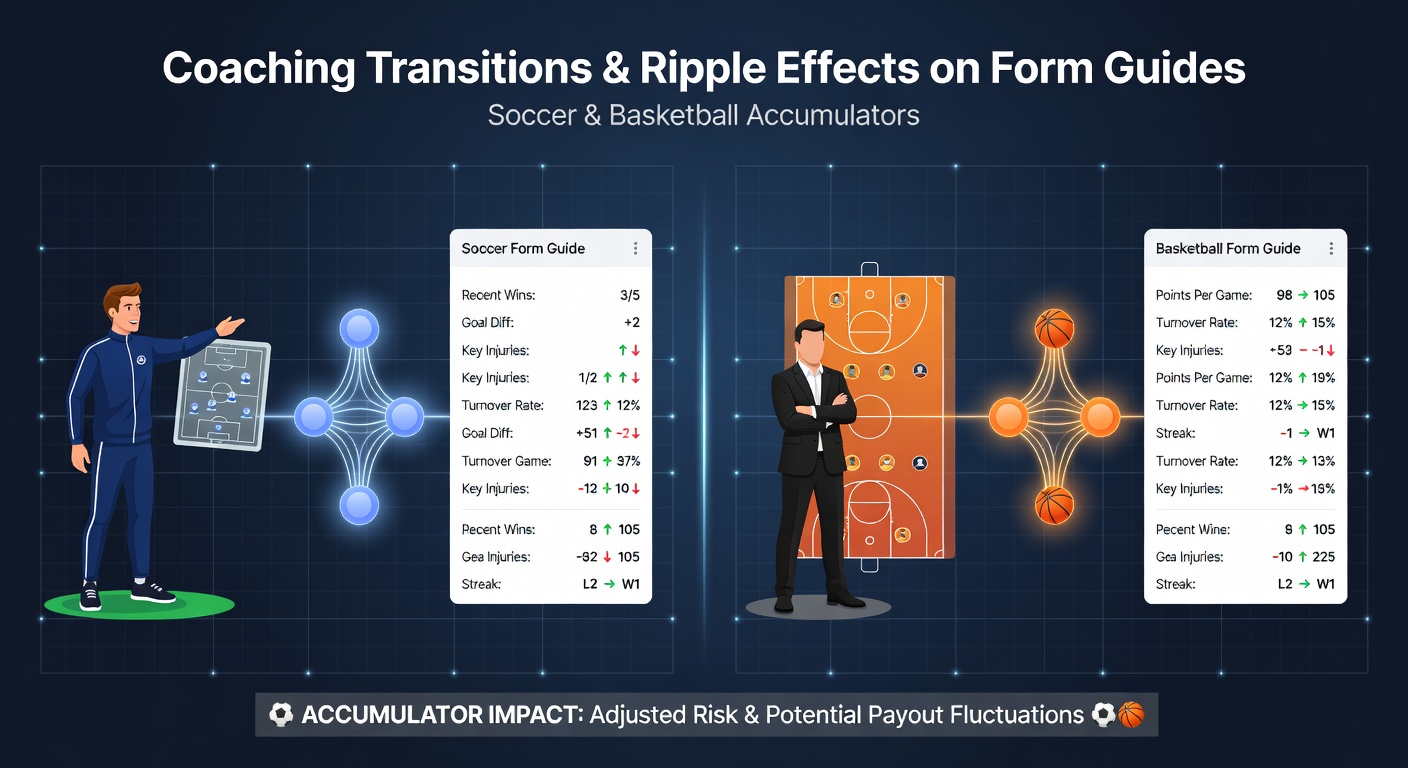 Coaching transitions often reshape team dynamics in ways that ripple through performance data and alter the reliability of form guides used for soccer and basketball accumulators, and analysts track these shifts closely because early adjustments in tactics and player roles frequently produce measurable changes in win rates, goal differentials, and defensive efficiency. Research from league-wide performance databases shows that soccer squads experiencing a mid-season manager replacement tend to post improved points-per-game averages within the first six matches, while basketball teams under new head coaches record adjustments in pace and three-point volume that stabilize only after eight to ten games.
Patterns in Soccer After Managerial Shifts
Observers note that soccer clubs across major European leagues display consistent trends when leadership changes occur, with attacking output rising initially as new systems emphasize possession and pressing intensity. Data collected through the 2025-2026 campaign reveals that teams appointing coaches with a track record in high-pressing setups increased expected goals by an average of 0.4 per match during the adjustment window, yet defensive vulnerabilities surfaced in transition phases until defensive lines reorganized. These fluctuations matter for accumulator builders who combine match outcomes across multiple fixtures because early overperformance can inflate short-term form indicators before regression sets in.
League records from May 2026 highlight several Premier League and Serie A cases where incoming coaches altered set-piece strategies, resulting in a 12 percent uptick in goals from dead-ball situations during the first month. Form guides that fail to segment pre- and post-transition statistics therefore risk misrepresenting true team strength, especially when accumulators include legs from both domestic and European competitions where fixture congestion compounds adaptation challenges.
Basketball Coaching Changes and Statistical Adjustments
Basketball presents parallel yet distinct responses to coaching transitions because the faster game pace allows quicker implementation of new offensive schemes and defensive coverages. Studies of NBA and EuroLeague squads indicate that teams installing motion-based offenses under fresh leadership see assist-to-turnover ratios climb within four games, while defensive rating improvements require longer periods as players internalize rotations. Accumulator strategies that layer basketball legs alongside soccer selections must therefore account for these differing stabilization timelines to avoid pairing volatile short-term data with steadier multi-week trends.
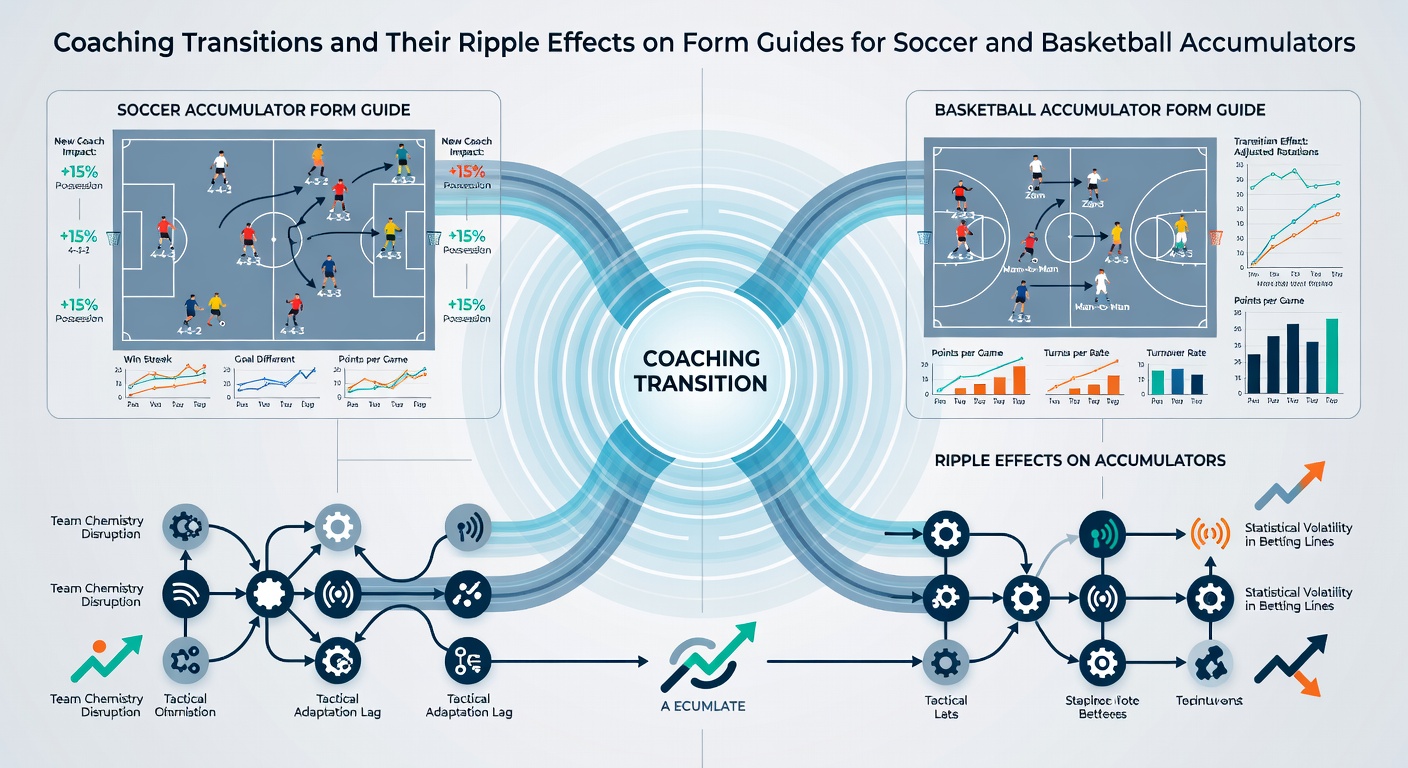
Performance tracking organizations report that basketball clubs changing coaches during the 2025-2026 season experienced a temporary dip in rebounding efficiency followed by a rebound once player roles clarified, and these patterns appear most pronounced in teams that previously relied on isolation-heavy approaches. Form guides incorporating advanced metrics such as player impact estimates and pace-adjusted efficiency therefore provide more accurate inputs for multi-sport accumulators than traditional box-score averages alone.
Building Accumulators Around Transition Data
Those constructing soccer and basketball accumulators increasingly cross-reference coaching tenure length with historical performance bands because evidence shows that the second month after a change often delivers the most stable signals for both sports. League analytics from North American and European sources demonstrate that pairing a soccer side still in its tactical bedding-in phase with a basketball team whose new system has reached equilibrium reduces variance in combined outcomes, particularly when totals and handicap markets are involved.
External datasets from the National Collegiate Athletic Association and the European Club Association illustrate how youth and academy integrations under new coaching staffs accelerate or delay form recovery depending on squad depth, and these factors become relevant when accumulators span reserve or development league fixtures. Observers tracking May 2026 results noted several instances where mid-table basketball sides posted outsized point differentials after coaching adjustments that coincided with favorable remaining schedules, while soccer counterparts showed more gradual climbs once injuries from prior regimes healed.
Integrating Multiple Data Layers
Form guide reliability improves when analysts segment statistics by coaching regime rather than applying rolling averages across entire seasons, and this segmentation reveals clearer edges for accumulator construction. Researchers compiling multi-league databases emphasize that defensive metrics in soccer and transition defense numbers in basketball shift most noticeably in the initial six to eight matches, after which offensive identity solidifies and produces more predictable scoring distributions. Accumulators that weight recent post-transition games more heavily than older results therefore align better with observed performance trajectories across both sports.
Conclusion
Coaching transitions continue to generate distinct statistical signatures that reshape form guides for soccer and basketball accumulators, and those who incorporate regime-specific data segments achieve more consistent alignment with actual match outcomes. Performance records from recent seasons underscore the value of monitoring stabilization periods, pace adjustments, and efficiency metrics when combining selections across the two sports, particularly during windows such as May 2026 when schedule density amplifies adaptation effects.