23 Aug 2026
Historical Official Assignments Revealing Clues on Infraction Rates for Soccer and Basketball Multi-Layer Markets
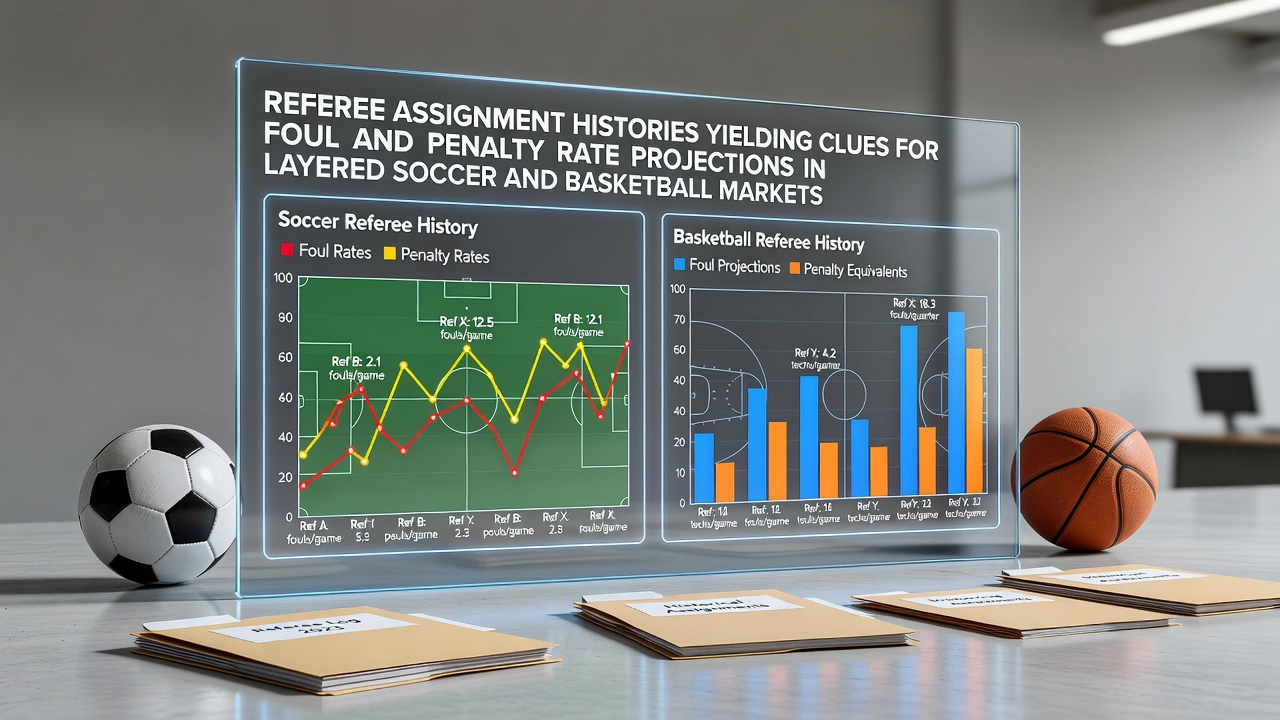
Analysts tracking referee assignments across major leagues have identified consistent correlations between specific officials and elevated foul or penalty frequencies, patterns that extend into layered market structures where multiple wager types overlap on single events or series. Data compiled from domestic and international competitions shows that certain referees maintain higher average card issuances per match, while others demonstrate tendencies toward stricter interpretations of contact in the penalty area during soccer fixtures or loose ball situations in basketball contests. These historical records allow projections to incorporate referee-specific baselines rather than relying solely on team averages or league-wide norms.
Patterns Emerging from Assignment Records
League schedules released ahead of each season list officiating crews weeks in advance, creating opportunities for detailed review of past performance metrics. In soccer, for instance, assignments from the English Premier League and Bundesliga demonstrate that referees with backgrounds in lower divisions often call more fouls in transitional play during their first seasons at the top level. Basketball assignments from the NBA and EuroLeague similarly reveal officials who issue technical fouls at rates exceeding the median, particularly in road games where crowd noise influences decision thresholds. Researchers at academic institutions have cross-referenced these datasets with outcome logs, confirming that incorporating referee identity improves accuracy when forecasting total fouls or cards over a 90-minute soccer match or four quarters of basketball action.
Application to Layered Market Structures
Layered markets combine primary lines such as match totals with secondary propositions involving cards, penalties, or free throws, and referee histories provide measurable adjustments to those combined expectations. When a soccer match features an official known for frequent penalty area interventions, models adjust projected penalty kick probabilities upward by documented margins drawn from prior seasons. In basketball, assignments involving crews with elevated foul call rates shift projections for total free throw attempts, which then influence correlated player prop markets. Observers note that these adjustments become especially relevant during periods of fixture congestion, such as the overlapping international windows and domestic schedules observed in August 2026, when multiple competitions run simultaneously and referee pools experience greater rotation.

European regulatory bodies including the Malta Gaming Authority have published aggregated statistics on market liquidity across such layered products, indicating steady growth in volume for combined soccer and basketball propositions. Australian wagering authorities have likewise recorded increased participation in multi-sport accumulators that include disciplinary elements, underscoring the commercial scale attached to refined projection methods. These figures reveal that operators update pricing engines with referee data feeds to maintain balanced books when assignments become public.
Cross-Sport Comparisons and Data Integration
While soccer and basketball differ in rules and pace, shared analytical approaches apply when referee histories enter projection frameworks. Soccer data emphasizes card color distributions and penalty conversions, whereas basketball records focus on personal foul totals per official and their impact on overtime frequency. Integration occurs through standardized databases that normalize these metrics across sports, allowing layered market operators to apply consistent weighting when constructing combined offerings. Studies from North American research centers have demonstrated that such normalized inputs reduce variance in projected outcomes compared with models omitting referee variables.
Assignment changes due to injury or suspension introduce additional variables, yet historical substitution patterns show that replacement officials often mirror the tendencies of their predecessors within narrow statistical bands. This continuity supports ongoing model calibration throughout the season. In August 2026, with several high-profile tournaments underway, scheduling authorities published revised crew lists that analysts immediately incorporated into updated projections for overlapping soccer and basketball events.
Conclusion
Referee assignment histories supply quantifiable inputs that refine foul and penalty rate projections across layered soccer and basketball market structures. League records, academic analyses, and regulatory statistics together demonstrate measurable links between individual officials and disciplinary outcomes, enabling more precise modeling when primary and secondary wager types intersect. As assignment transparency increases and data integration tools advance, these historical patterns continue to inform market expectations without reliance on broader team or league averages alone.