24 Jun 2026
Jet Lag Recovery Timelines Reshaping Point Spreads During Overlapping ATP Tennis Tours and NBA Back-to-Backs
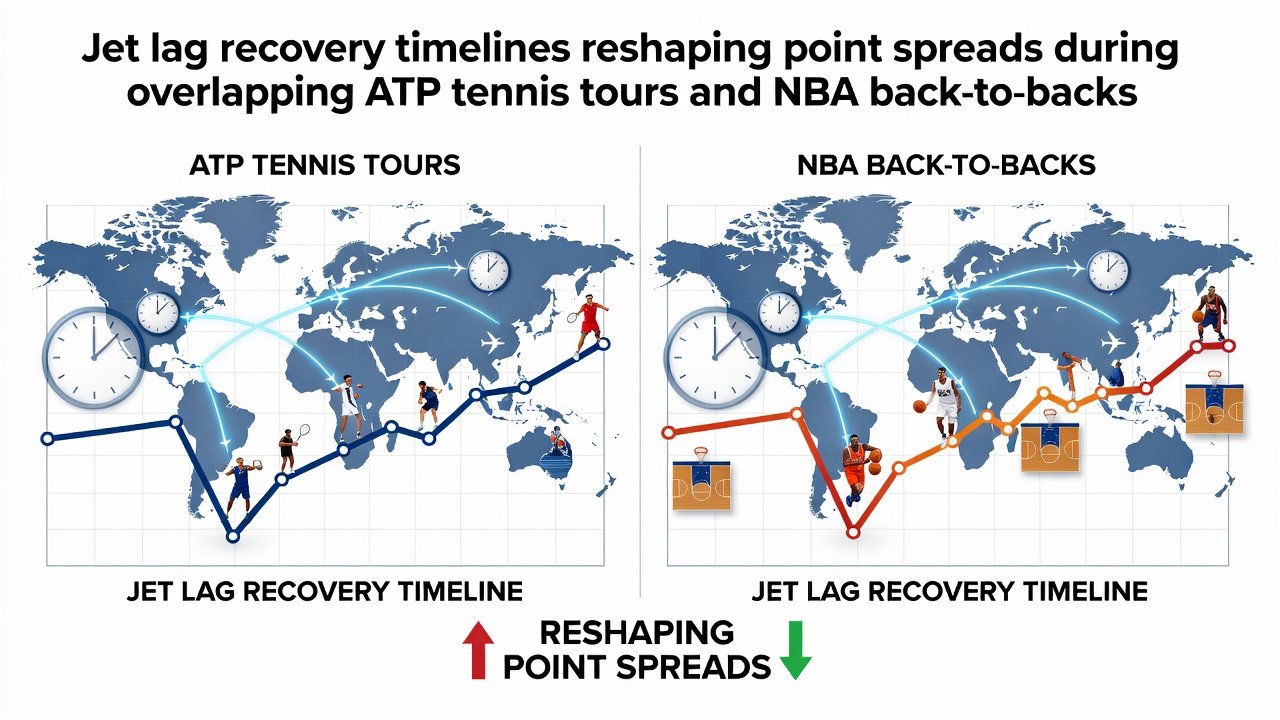
Jet lag recovery timelines have become a measurable factor in how oddsmakers adjust point spreads when ATP tennis tours overlap with NBA back-to-back schedules, especially during periods of dense international travel in 2026. Athletes crossing multiple time zones experience disruptions in circadian rhythms that affect reaction times, endurance, and decision-making for several days after arrival, and these effects show up in performance data that sportsbooks incorporate into betting lines.
How Circadian Disruption Influences Athletic Output
Studies from institutions such as the University of California, Los Angeles have documented that westward travel tends to produce faster adjustment than eastward flights, with full physiological recovery often requiring one day per time zone crossed for most competitors. When an NBA team plays in Europe or Asia before returning for consecutive domestic games, or when ATP players move from Australian tournaments directly into North American hard-court events, the lag period overlaps with scheduled matches and forces oddsmakers to recalculate expected margins.
Data collected across multiple seasons indicate that teams or players still within the first 48 hours of arrival after crossing five or more zones post lower shooting percentages, reduced serve speeds, and higher turnover rates in basketball or unforced errors in tennis. These patterns appear consistently enough that betting markets now embed recovery windows into opening lines rather than treating them as secondary adjustments.
Overlapping Schedules in June 2026
June 2026 features several ATP events running alongside NBA playoff and offseason conditioning schedules, creating situations where athletes from both sports navigate similar long-haul routes within days of each other. The overlapping calendar means that a player finishing a clay-court swing in Europe may arrive in North America on the same day an NBA squad returns from an international exhibition, placing both groups on parallel recovery curves that sportsbooks monitor through aggregated performance metrics.
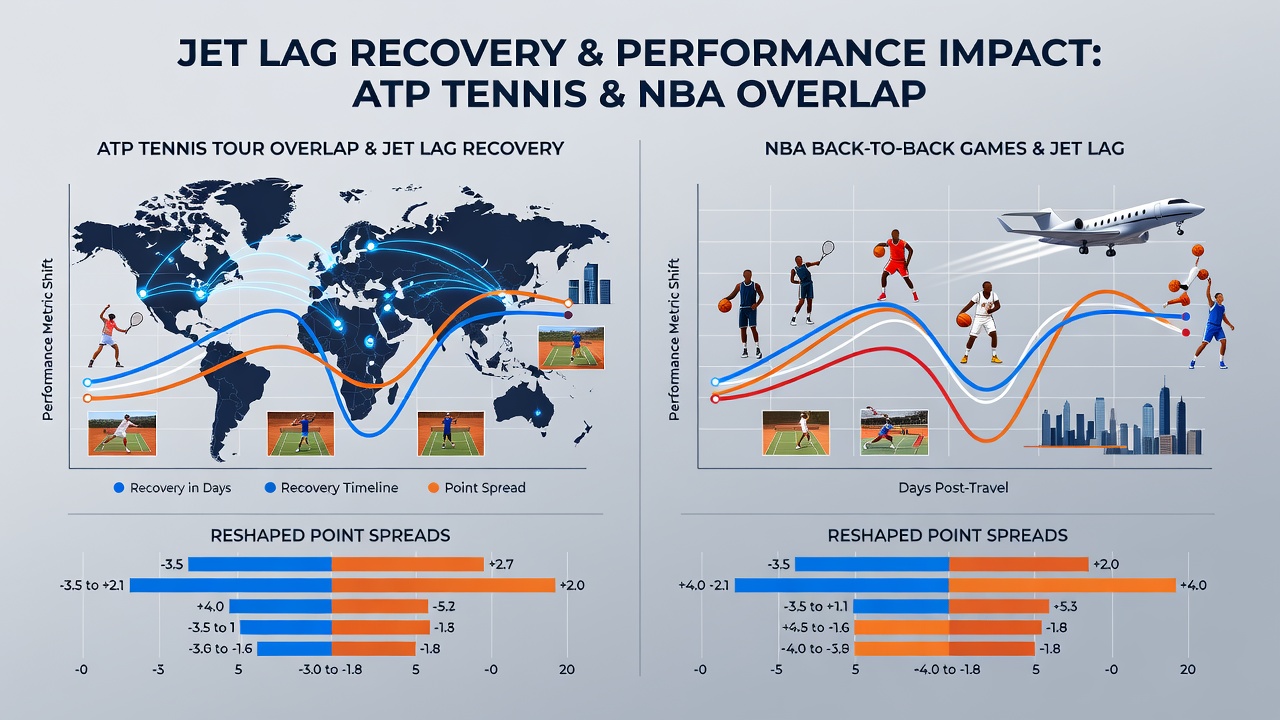
Point spreads in these windows typically widen or narrow by two to four points in basketball and equivalent game margins in tennis sets, depending on the direction of travel and the number of time zones traversed. Historical datasets compiled by sports analytics firms show that squads or individuals on the shorter side of the recovery timeline cover the adjusted spread at rates that deviate measurably from their season averages.
Recovery Timelines and Line Movement
Recovery does not follow a uniform schedule across all athletes, yet patterns emerge when large sample sizes are examined. Eastward travel often extends the adjustment period by an additional 24 to 36 hours compared with westward journeys of equal distance, while individual factors such as age and prior travel load further modulate the timeline. Oddsmakers track these variables through proprietary models that integrate flight data, historical box scores, and biometric reports released by teams and tours.
During back-to-back NBA games that follow international trips, second-game spreads frequently reflect the cumulative fatigue from the first contest plus residual jet lag. In ATP events, matches scheduled on the second or third day after arrival show serve percentages and rally lengths that differ from baseline figures recorded after full acclimatization. These shifts prompt line movement that occurs earlier in the betting cycle than in non-travel weeks.
Market Response and Data Integration
Sportsbooks have increased the weight given to travel analytics since 2024, incorporating inputs from sources that include academic circadian research and league-provided wellness data. A report issued by the Australian Institute of Sport outlines how elite athletes regain baseline neuromuscular function after long-haul flights, and several North American betting operators reference similar frameworks when setting totals and spreads for overlapping events.
Because ATP and NBA calendars occasionally align in early summer, bettors who follow recovery timelines can identify spreads that initially undervalue or overvalue the impact of travel. Line movement in these cases tends to stabilize once additional public data on recent travel becomes available, yet early market reactions often embed conservative estimates of fatigue effects.
Conclusion
Jet lag recovery timelines now function as a standard input in point-spread calculations whenever ATP tennis tours and NBA back-to-backs share overlapping travel demands. Performance datasets compiled across multiple seasons demonstrate measurable deviations in key statistics during the first three days after multi-zone flights, prompting sportsbooks to adjust margins accordingly. As calendars continue to feature concurrent international commitments in 2026, these physiological factors remain embedded in the pricing process rather than treated as occasional variables.