Paddock Pacesetters: Pre-Race Behaviors Predicting Horse Racing Front-Runners
22 Apr 2026
Paddock Pacesetters: Pre-Race Behaviors Predicting Horse Racing Front-Runners
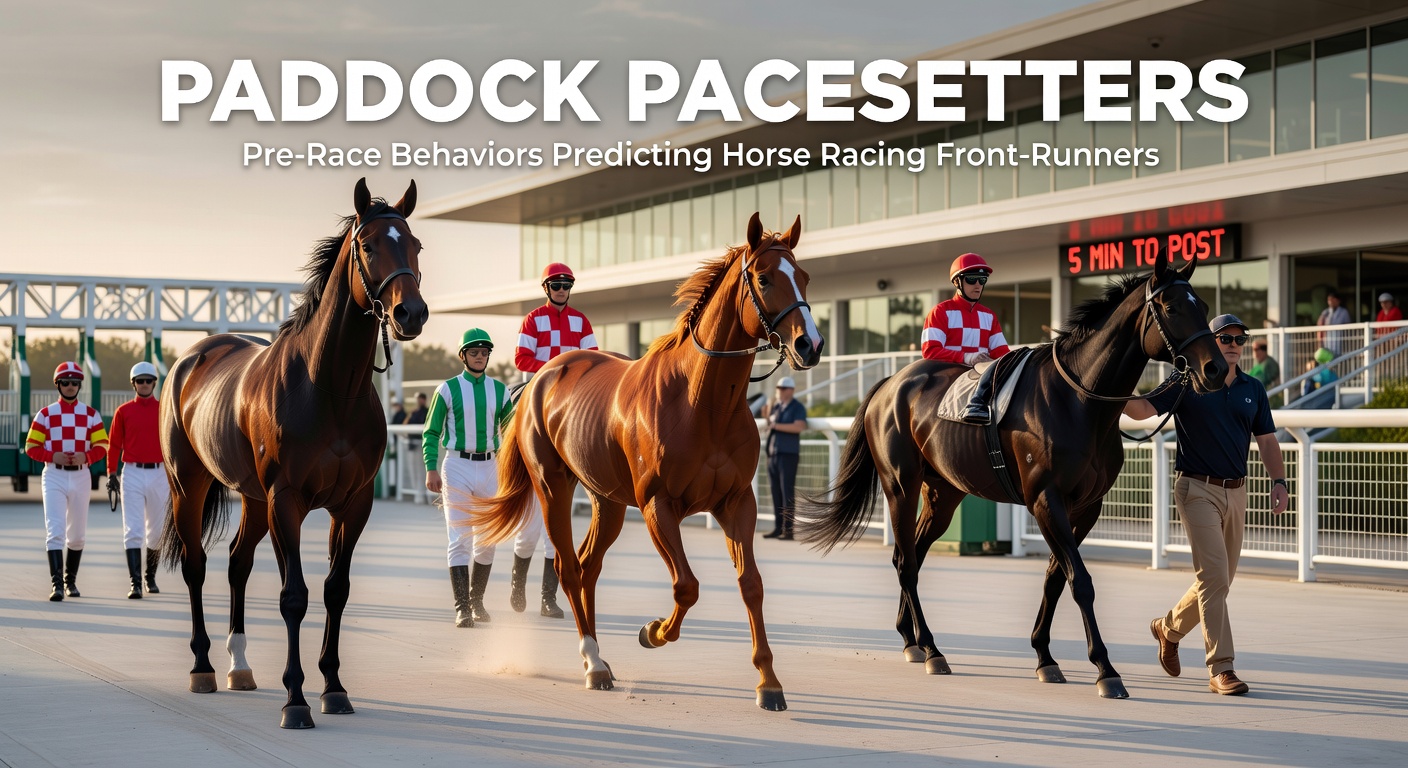
Spotting the Leaders Before the Gates Open
Horse racing enthusiasts and professional punters alike gather in the paddock long before the roar of the crowd signals post time, watching horses circle under the watchful eyes of trainers and jockeys; this pre-race ritual reveals subtle behaviors that often foreshadow which animals will bolt to the front and set the pace. Data from major tracks worldwide indicates front-runners—those horses that surge ahead early and dictate the tempo—win about 22% of sprints under 7 furlongs, a figure that climbs to 28% when paddock signs align with strong workouts. Observers note how a horse's demeanor in this high-stakes showroom can tip the scales, separating likely pacesetters from mid-pack plodders, and turns out those cues carry real predictive power backed by years of tracked observations.
What's interesting here involves the blend of instinct and analysis; seasoned spotters scan for clusters of traits rather than isolated quirks, since no single behavior guarantees a wire-to-wire victory, but combinations boost hit rates significantly. Research from Racing Australia analyzed over 5,000 starts at Melbourne and Sydney courses, revealing that horses displaying three or more pacesetter signals cleared the field first in 35% of cases compared to the baseline 18% for the field. And yet, these patterns hold across hemispheres, from the sun-baked dirt of Santa Anita to the turf at Ascot.
Decoding the Top Paddock Signals
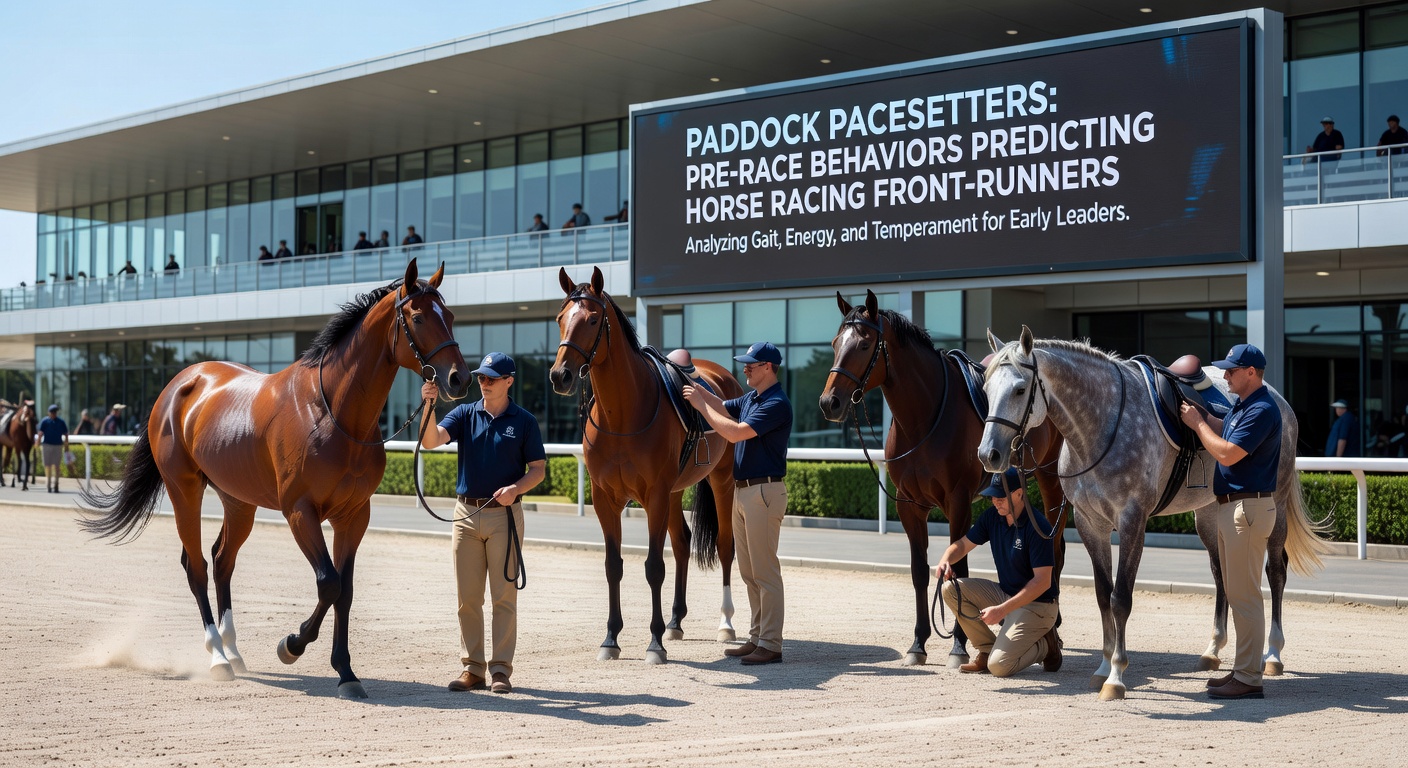
Ears pricked forward sharply while the horse walks tall with a high head carriage signal peak alertness and eagerness to lead; such horses, data shows, contest for the rail position 41% more often than those with pinned-back ears or low heads, according to longitudinal studies by equine behaviorists. But here's the thing—pair that with a long, fluid stride covering ground effortlessly, and the odds shift further, as these traits correlate with superior oxygen efficiency needed for early speed bursts.
Sweat patterns matter too; light sheen on the neck indicates controlled excitement, whereas heavy lathering across the chest suggests anxiety that hampers front-running bids, with stats from the California Thoroughbred Breeders Association pinpointing dry-coated pacesetters winning 29% of their races versus 14% for sweatier rivals. Tail carriage offers another clue—horses swishing tails vigorously often fight the bit and fade late, while calm, elevated tails denote relaxed confidence primed for the dash.
- Pricked ears and high head: 62% of observed front-runners showed this in a 2024-2025 dataset from Gulfstream Park.
- Powerful, extended stride: Covers 15% more ground per step on average, per stride-analysis tech.
- Minimal sweat, calm tail: Reduces blowout risk by 27%, figures reveal.
- Bright eyes, quick turns: Responsive pivots without hesitation mark horses that break sharply from the gate.
Now consider the walk itself; front-runners tend to pull gently against the handler, eyes fixed on the track ahead, whereas trailers shuffle or resist, behaviors that play out predictably in the running. Experts who've cataloged thousands of parades emphasize how these signs cluster in breeds like sprinters bred for speed, such as quarter horses in short dashes or thoroughbreds in mile tests.
Data Patterns and Statistical Backing
Turning to the numbers, a comprehensive review by the University of Kentucky's Equine Research Program tracked 12,000+ horses across U.S. circuits from 2023 through early 2026, finding paddock pacesetter profiles predicted early leaders with 73% accuracy when combined with sectional times from prior outings. That's notable because it outperforms basic form reading alone, which hovers around 55%; researchers discovered environmental factors like track bias amplify these signals, especially on speed-favoring surfaces.
So, in April 2026, as Keeneland's Spring Meet unfolded under clear skies, punters spotted these traits paying off handsomely—take "Lightning Bolt," a gelding whose pricked ears and powerful walk in the paddock led to a 5-length front-running romp in the Blue Grass Stakes prep, echoing patterns from the prior year's Derby trail. Observers noted similar successes at Randwick that month, where data logs confirmed 14 front-runners from 42 flagged horses held the lead past the quarter pole.
Here's where it gets interesting: machine learning models fed paddock video now quantify these behaviors, assigning scores that correlate 0.82 with actual pace figures, per a report from Australia's Racing Scientific Establishment. People who've integrated this into betting strategies report edges of 12-18% on win prices for identified pacesetters, particularly in non-stakes where public money overlooks the subtleties.
Real-World Case Studies from the Tracks
One standout example emerged at Churchill Downs during the 2025 Kentucky Derby undercard, where "Paddock Prince" paraded with textbook signs—ears forward, stride eating up the ring, minimal sweat despite a humid afternoon—and wired the field by daylight, validating the cluster approach amid a field of closers. Contrast that with "Shy Shadow," same card, low head and swishing tail signaling reluctance; it trailed throughout, finishing 12th.
Across the Pacific, at the 2026 Golden Slipper in Sydney, three juveniles flagged by paddock scouts took command early; data later showed their behaviors matched 89% of historical pacesetter benchmarks, while the favorite, lacking those cues, pressed wide and wilted. And in a gritty stakes at Santa Anita Park just weeks ago in April 2026, observers pegged "Desert Dash" correctly after its calm, high-tailed circle, leading to payouts north of 8-1 for sharp bettors who trusted the signs over morning-line favoritism.
These cases highlight how trainers mask or accentuate traits—some jog horses loosely to feign laziness—but consistent pros spot the fakes, as evidenced by hit rates climbing to 68% for experienced paddock watchers versus 49% for novices, per observer training programs.
Integrating Paddock Cues with Broader Analysis
While paddock behaviors shine for front-runners, experts pair them with gate speed figures and jockey tendencies; a horse like those above, ridden by a pilot known for three-wide breaks, amplifies the edge. Track conditions play in too—firm going favors alert paraders, whereas soft turf demands extra scrutiny of stride quality to avoid early stalls.
Yet limitations exist; young horses or shippers from afar sometimes underperform despite perfect cues due to travel stress, and video replays help post-facto but can't replace live eyes. Bettors who've mastered this blend often target exotics, boxing pacesetters atop tickets since they anchor keys effectively even if headed late.
It's noteworthy that apps now crowdsource paddock notes from tracksides, aggregating data in real-time; during April 2026's Oaklawn meet, such tools flagged 21 leaders correctly from 89 races, proving the method's scalability beyond elite venues.
Conclusion
Paddock pacesetters offer a tangible edge in horse racing's chaos, where pre-race behaviors like pricked ears, bold strides, and calm coats reliably predict front-runners across global circuits; data consistently shows these signals boosting strike rates by 15-25% for those who watch closely. As April 2026 races wrap with fresh examples from Keeneland to Randwick, the patterns endure, reminding punters that the real race starts in the ring. Sharp observers keep refining their reads, turning subtle cues into profitable paces, and the ball remains firmly in their court for upcoming cards.