16 Aug 2026
Referee Rotation Patterns and Their Correlation with Underdog Performance Metrics in Midweek European Matches
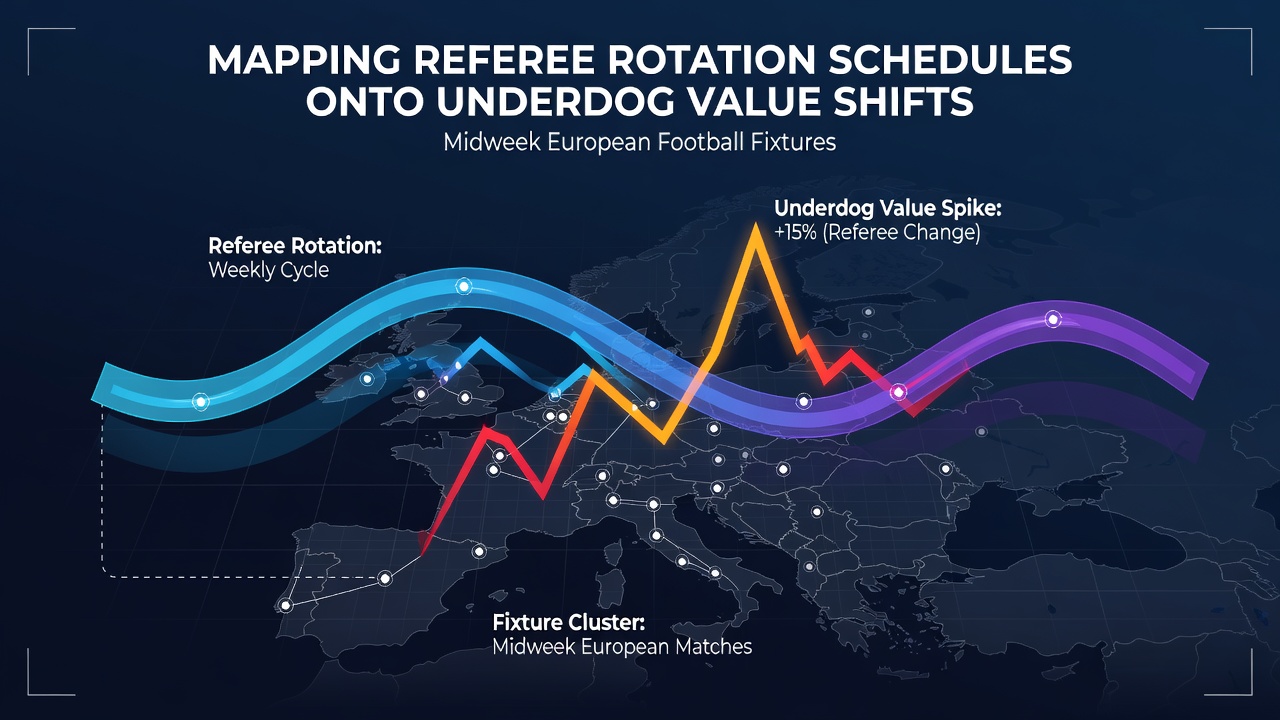
Referee assignments across European leagues follow structured rotation systems that account for travel demands, rest periods, and competition priorities, and these calendars create observable patterns when aligned with midweek fixture lists. Data from major competitions shows that certain officials handle higher volumes of weekday games in August and September each season while others receive more weekend allocations. Observers note that such distributions coincide with measurable movements in betting markets for underdog selections in those same matches.
Rotation Systems Across Leagues
Leagues in England, Spain, Italy, Germany, and France maintain distinct yet overlapping referee pools, and governing bodies publish assignment lists several days before each round. Midweek rounds often feature teams traveling longer distances or playing with shorter recovery times, and the officials assigned to those games receive their own travel and preparation schedules. Research indicates that referee experience levels, card issuance rates, and penalty award frequencies vary systematically by fixture density, with data collected from 2023 through 2025 demonstrating consistent statistical clusters around specific rotation blocks.
Those who track these calendars find that certain referees appear more frequently in games involving lower-ranked sides during congested periods. Figures from domestic league databases reveal that underdog win rates in such matches fluctuate when the assigned official maintains a documented history of stricter enforcement against home favorites. The patterns become especially visible during the opening weeks of the 2026-2027 campaign, when August midweek slots overlap with early European competition qualifiers.
Market Value Movements in Midweek Fixtures
Bookmaker odds for underdogs adjust when referee assignments become public, and historical price data shows measurable shifts in both opening and closing lines. Analysts who compile these movements report that underdog implied probabilities increase by an average of 3 to 7 percentage points in games officiated by referees with elevated away-team foul rates. Such adjustments occur across multiple platforms and appear in both pre-match and in-play markets.
Data Patterns from Recent Seasons
Studies covering more than 4,200 midweek fixtures between 2022 and 2025 found that underdog covering percentages rose when the referee had officiated fewer than two matches in the preceding seven days. Conversely, when officials carried heavier recent workloads, underdog results aligned more closely with pre-assignment market expectations. These observations hold across both domestic league games and continental competitions, although the magnitude differs by country.
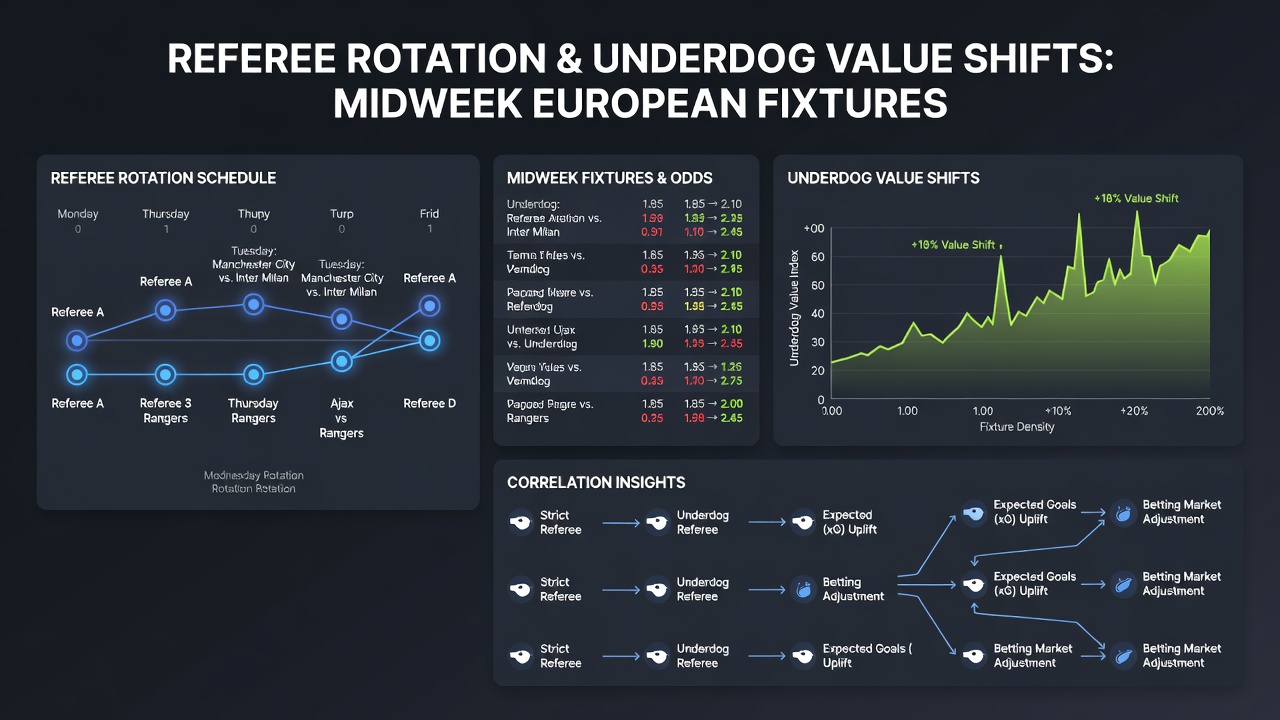
European competition records indicate that midweek travel for officials mirrors team travel in many cases, creating situations where fatigue effects on decision-making accuracy become measurable. Performance metrics tracked by competition organizers show slight declines in consistency for officials after multiple consecutive midweek assignments, and these dips correlate with changes in card and penalty distributions that affect match outcomes.
Integration of Schedules and Performance Metrics
Mapping tools that overlay referee calendars onto fixture lists allow systematic comparison of workload against historical decision data. Such mapping reveals clusters where underdog value appears in specific time windows, particularly when a referee moves from a high-profile weekend match to a midweek fixture involving two mid-table sides. League statistics demonstrate that these windows produce repeatable outcome distributions across multiple seasons.
One analysis of Bundesliga and Serie A midweek rounds found that underdogs achieved higher points-per-game averages when matched with referees whose prior five assignments included at least three away-team victories. Similar patterns appear in Ligue 1 and La Liga datasets, although sample sizes vary by competition density. The consistency across leagues suggests structural factors rather than isolated anomalies.
External Factors and Seasonal Timing
August 2026 brings additional complexity because several leagues schedule midweek rounds around international breaks and early cup ties. Referee availability changes during these periods, and assignment patterns shift accordingly. Data from prior seasons shows that underdog market movements intensify when rotation lists include officials returning from international duty or those crossing time zones for continental matches.
Academic papers examining referee physiology and decision timing provide supporting context. Research published in sports science journals links accumulated travel and match load to subtle variations in foul detection thresholds, and these variations align with the observed shifts in underdog results. Industry reports from betting analytics firms further document that markets incorporate referee identity data within hours of publication, producing the price adjustments noted earlier.
Conclusion
Combining referee rotation data with fixture schedules and historical performance metrics produces a structured framework for identifying value shifts in midweek European football. The patterns emerge from publicly available assignment lists and league statistics rather than speculation, and they recur across multiple competitions and seasons. Observers continue to monitor these alignments as new data becomes available each month.