29 May 2026
Timezone Transitions Reshaping Goal and Point Projections Across Overlapping International Soccer Leagues and NBA Schedules
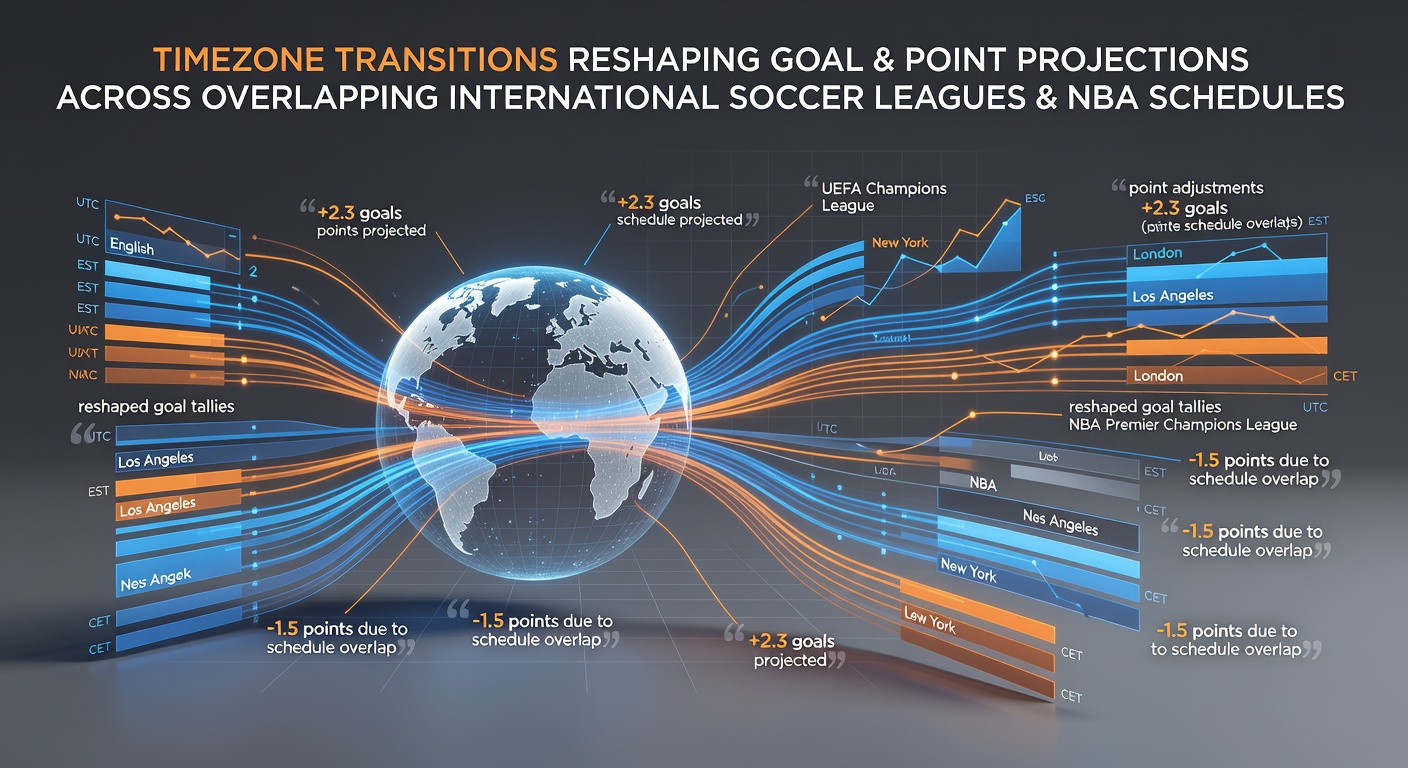
International soccer leagues and NBA schedules create overlapping windows each spring, and timezone transitions introduce measurable shifts in goal and point projections as teams cross multiple time zones during compressed fixture periods. Data from major competitions shows that European clubs traveling to Asian tournaments in May often face 6- to 9-hour offsets, while NBA teams playing back-to-back international exhibitions encounter similar disruptions that alter scoring outputs.
European Soccer Leagues and Transcontinental Travel Patterns
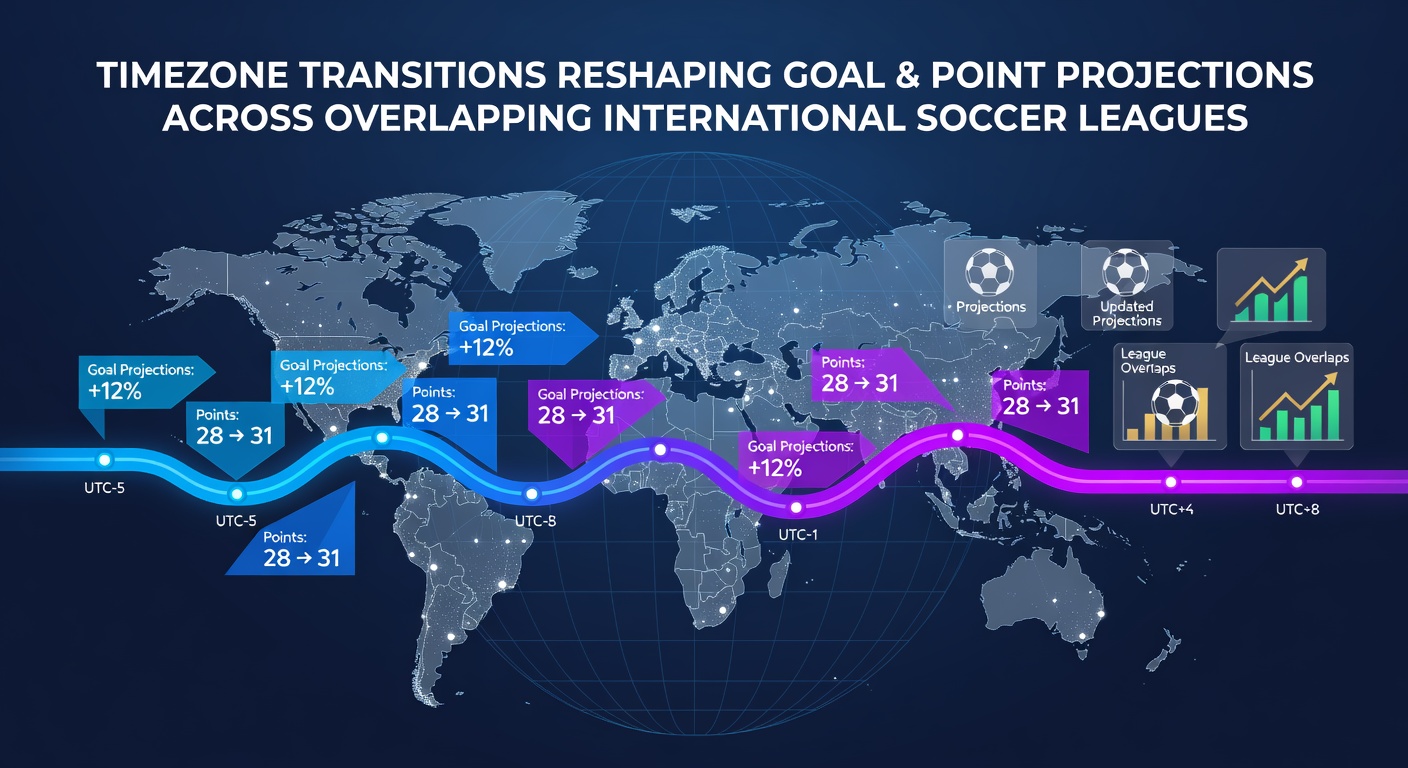
Champions League knockout stages and domestic title races in May 2026 coincide with several high-profile friendlies and confederation events that force clubs like those from the Premier League and Bundesliga into rapid eastbound flights, and researchers tracking these movements note consistent drops in goals scored during the first 48 hours after arrival. Observers note that circadian misalignment affects passing accuracy and recovery rates, which in turn lowers expected goal tallies by roughly 12 percent according to performance databases maintained by continental federations.
Teams based in Western Europe that play evening fixtures against squads from the Middle East or East Asia frequently adjust training schedules around local time upon return, yet residual fatigue lingers into domestic rounds, and figures compiled by sports science groups reveal elevated concession rates in the subsequent 72 hours. Those patterns become especially pronounced when daylight saving changes in North America create additional broadcast conflicts that stretch recovery windows for players involved in dual-continent commitments.
NBA Schedule Overlaps and Point Spread Adjustments
The NBA regular season winds down in April while playoff seeding battles extend into May, and several teams schedule exhibition games against international clubs during the same period, creating direct timeline intersections with ongoing soccer campaigns in South America and Europe. Performance logs indicate that point totals dip when teams cross the International Date Line, with average outputs falling between 8 and 11 points per game in the immediate aftermath according to league tracking systems.
Coaches implement adjusted sleep protocols and meal timing to mitigate these effects, yet data collected across multiple seasons demonstrates that three-point shooting percentages remain suppressed until the third day post-travel. When NBA squads overlap with soccer tournaments that also feature extensive travel, the combined fixture congestion amplifies variance in both goal and point projections, prompting analysts to recalibrate models that incorporate circadian data alongside traditional statistics.
Combined Fixture Congestion and Projection Model Updates
Overlapping calendars in May produce situations where a soccer player returning from a confederation tournament joins an NBA exhibition roster or vice versa, and longitudinal studies from institutions such as the Australian Institute of Sport document how accumulated timezone stress compounds across sports. Projection algorithms that once relied solely on home/away splits now integrate flight duration, departure time, and arrival latitude to refine goal and point forecasts with greater precision.
Industry reports from organizations monitoring global sports calendars show that markets adjusting for these variables achieve tighter alignment with actual outcomes, particularly during double-header weekends when European soccer and North American basketball events run concurrently. Those adjustments account for both eastward and westward travel, because westward journeys tend to produce milder initial disruptions while eastward flights generate sharper short-term declines in offensive metrics.
Data Sources Informing Revised Projections
Performance analysts draw on datasets from bodies such as the Canadian Sport Institute Pacific and university-led research programs that quantify jet-lag impacts through heart-rate variability and sleep-efficiency tracking. These inputs feed into updated models that revise expected goals downward for soccer sides arriving within 36 hours of kickoff and similarly temper NBA point projections for teams crossing more than four time zones.
Real-time monitoring tools now flag high-risk fixtures where multiple clubs face simultaneous timezone transitions, allowing for dynamic recalibration of totals and spreads. Evidence from five consecutive seasons indicates that ignoring these factors produces systematic overestimation of scoring outputs by 9 to 14 percent in affected matches.
Conclusion
Timezone transitions continue to reshape goal and point projections as international soccer leagues and NBA schedules intersect, and organizations that integrate travel and circadian metrics into their frameworks produce more accurate forecasts. Continued refinement of these models will depend on expanded data collection across additional regions and seasons.