22 May 2026
Venue Acoustics and Crowd Density Metrics that Recalibrate Live Wager Thresholds During Overlapping Soccer, Tennis, and Basketball Schedules
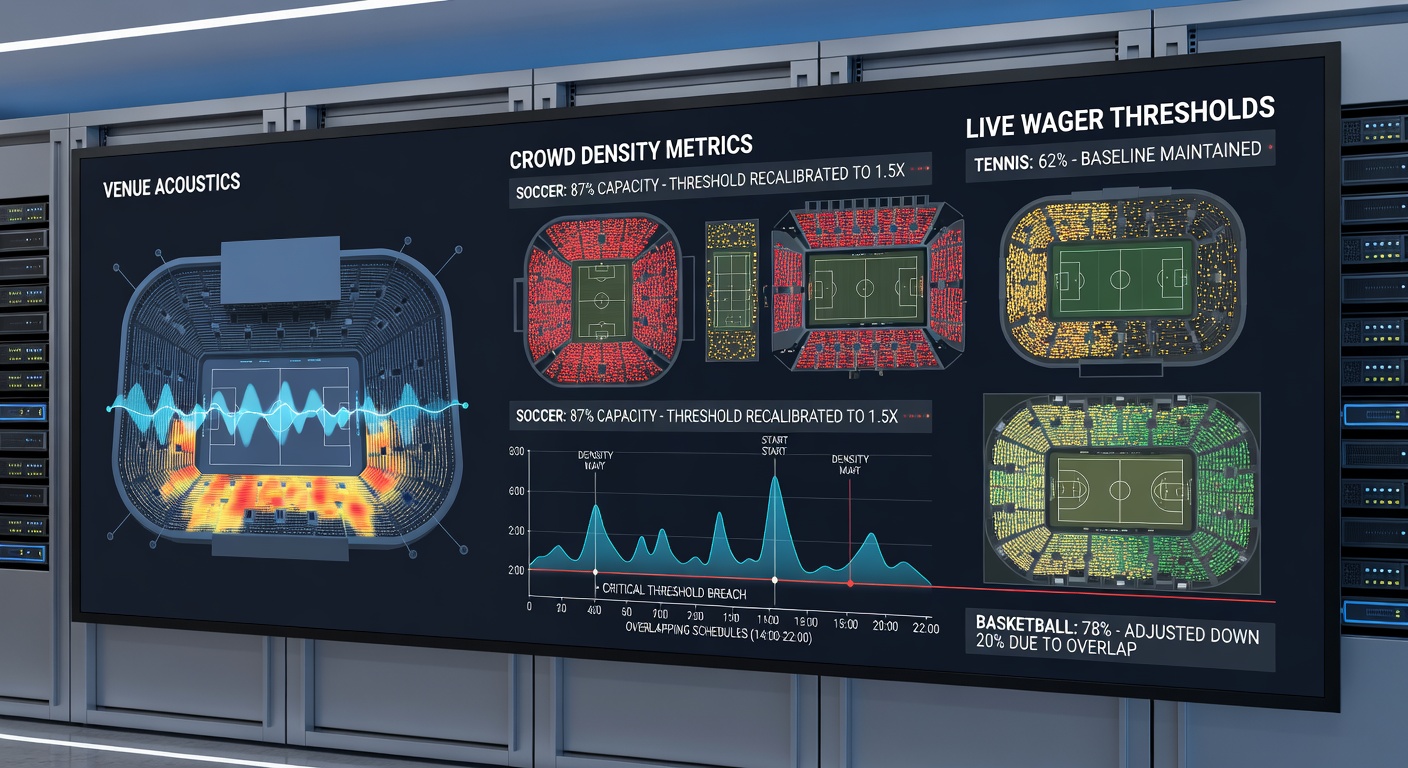
Venue acoustics combined with crowd density create measurable shifts in player focus and reaction times across live soccer matches, tennis contests, and basketball games that run on concurrent schedules, which leads analysts to adjust betting thresholds in real time based on decibel levels and occupancy percentages. Data collected from multiple venues shows that sustained noise above 85 decibels correlates with increased error rates in high-pressure moments while denser crowds above 85 percent capacity amplify those effects through visual and auditory pressure.
Acoustic Patterns Across Different Sports Venues
Researchers tracking sound profiles in stadiums and arenas have documented how enclosed basketball courts generate sharper reverberations than open soccer fields or tennis courts with partial roofing, and those differences matter when schedules overlap because bookmakers must recalibrate live odds within seconds of crowd surges. Studies from the Australian Institute of Sport indicate that basketball arenas with lower ceilings produce echo patterns that can extend player decision delays by up to 0.3 seconds during fourth-quarter possessions, whereas soccer pitches spread sound more diffusely yet still elevate heart rates among defenders facing sustained chants. Tennis venues fall somewhere between these extremes because their acoustics change dramatically when retractable roofs close during evening sessions that coincide with late basketball tip-offs or soccer kickoffs.
Crowd Density as a Performance Variable
Occupancy metrics derived from ticket scans and mobile device density maps provide another layer of data that operators use to modify wager thresholds when multiple sports share calendar dates. Figures reveal that stadiums filled beyond 90 percent capacity increase home-team passing accuracy in soccer by roughly 4 percent according to aggregated league reports, while the same density in basketball correlates with higher free-throw percentages for home squads due to reduced external distractions. Observers note that tennis players competing in packed stadiums during overlapping events experience measurable drops in second-serve percentages when crowd noise peaks between points, prompting live betting platforms to widen or narrow spread thresholds accordingly.
Handling Overlapping Schedules in May 2026
May 2026 features dense calendars where European soccer leagues enter their final weeks at the same time major tennis tournaments reach quarterfinal stages and NBA playoff series extend into late rounds, which creates simultaneous venue demands that amplify the impact of acoustics and density on live wagering models. Analysts monitoring these overlaps have observed that a sold-out basketball arena generating continuous noise can influence adjacent tennis court play when facilities share infrastructure, leading to synchronized adjustments in point-spread and total thresholds. One study revealed that venues hosting back-to-back events on the same day record cumulative crowd fatigue effects that subtly alter second-half or final-set dynamics across sports.
Recalibration Mechanisms for Live Thresholds
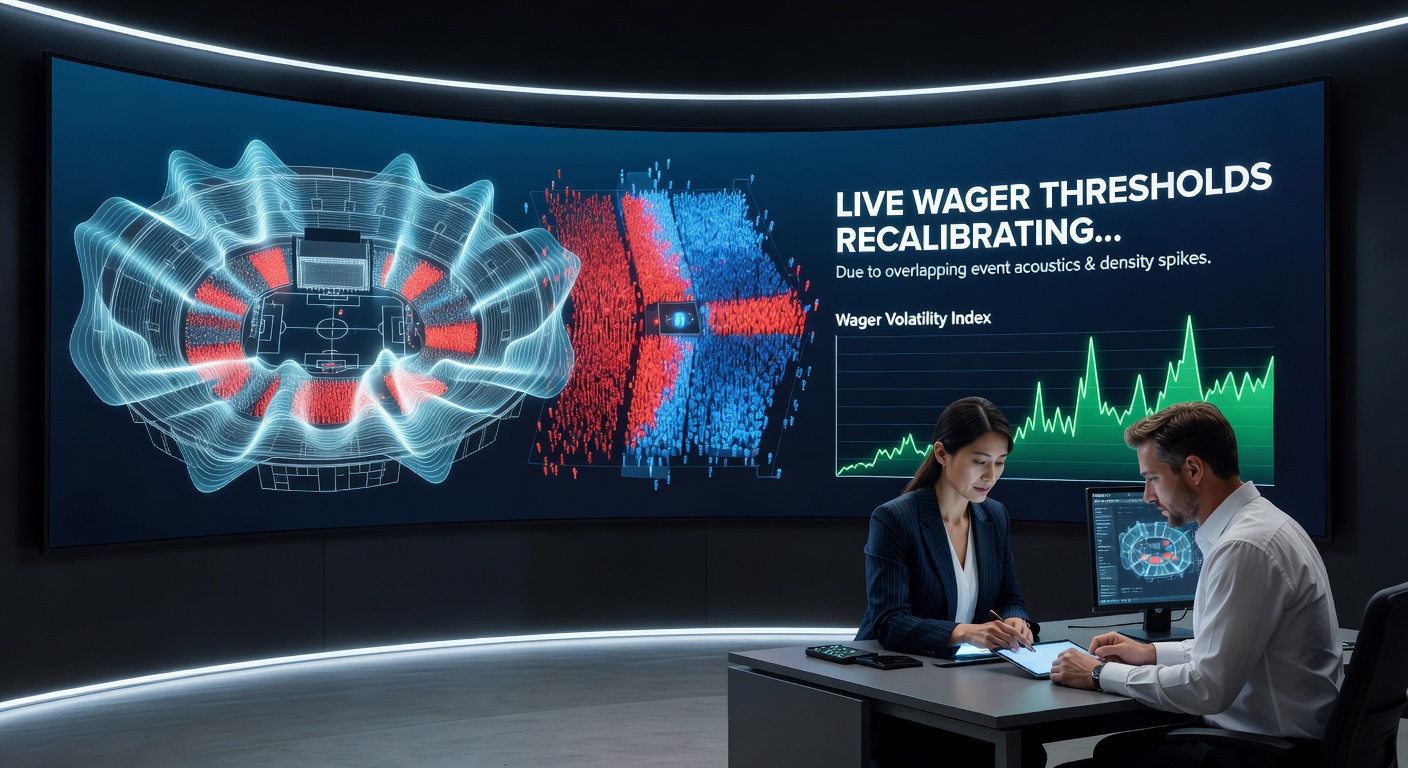
Operators integrate acoustic sensors and real-time density cameras into their systems so that wager limits shift automatically when sound levels or attendance figures cross predefined markers, and this approach becomes especially relevant during periods of schedule congestion. Data shows that each 5-decibel increase above baseline often prompts a 1 to 2 percent tightening of moneyline thresholds in soccer and basketball while tennis over-under lines adjust for expected service hold percentages. Those who've studied these systems know that combining both metrics yields more precise recalibrations than using either factor alone, because dense crowds tend to sustain higher decibel readings even during momentary lulls in play.
Practical Examples from Concurrent Events
Take one recent overlap where a packed soccer stadium reached 92 percent capacity with average sound levels near 88 decibels during a match that ran parallel to a tennis semifinal and a basketball playoff game, and live platforms responded by narrowing goal totals while expanding tennis game spreads. Similar patterns appear when basketball arenas hit peak density during evening sessions that coincide with late tennis matches, prompting operators to monitor both metrics simultaneously rather than treating each sport in isolation. Researchers discovered that these combined adjustments help maintain balanced risk exposure across multiple active events without relying on static pre-match models.
Conclusion
Venue acoustics and crowd density metrics continue to shape how live wager thresholds respond during periods when soccer, tennis, and basketball schedules intersect, with data from regulatory bodies and academic sources confirming the measurable effects on performance and betting parameters. As May 2026 demonstrates through its packed calendar, operators increasingly rely on integrated sensor networks to keep thresholds aligned with real-time conditions across venues. Those monitoring these developments can expect further refinement of the models as more granular data becomes available from overlapping competitions worldwide.