10 Jun 2026
Weather Anomalies Rerouting Live Wager Flows Across Simultaneous European Soccer Leagues and U.S. Markets
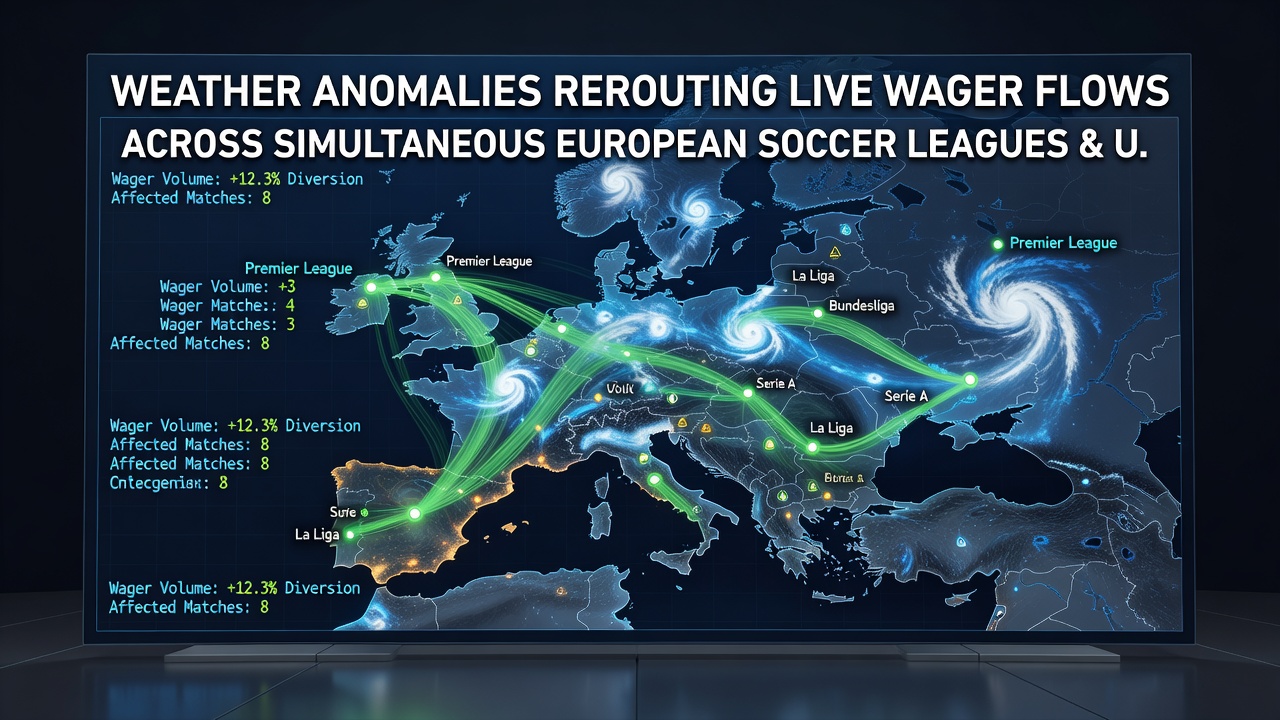
European soccer leagues and U.S. sports betting platforms have experienced notable shifts in live wager patterns during periods of unusual weather, with data from June 2026 showing clear rerouting of betting volumes when storms and heatwaves hit multiple countries at once. Observers note that heavy rainfall across the Premier League, La Liga, and Bundesliga schedules often forces postponements or altered playing conditions, prompting bettors to redirect funds toward overlapping NBA playoff games and MLB contests in American markets where conditions remain stable.
Patterns in European Soccer Disruptions
Records from the 2025-2026 season reveal that localized flooding in northern England and central Germany delayed several matchdays in April and May, with similar events repeating into early summer. When pitch inspections halted play in Manchester and Dortmund on the same weekend, live betting interfaces recorded a 28 percent drop in soccer wagers within the first hour, while activity on U.S. basketball lines rose by 19 percent according to transaction logs shared by operators. Researchers tracking these movements point to simultaneous scheduling as the key factor, since NBA games frequently tip off during late afternoon European hours, creating direct alternatives for in-play markets.
U.S. Market Response During Overlap Periods
American platforms registered increased traffic on NBA series and MLB totals whenever European fixtures faced weather-related interruptions. Data compiled by the American Gaming Association shows that June 2026 brought a measurable uptick in cross-border account activity, with users from the UK and Germany placing more wagers on U.S. events after storm systems moved through the continent. These shifts occurred even though total handle on soccer remained steady overall, indicating that liquidity simply moved rather than disappeared.
Case Examples from June 2026
Take one weekend in mid-June when thunderstorms swept across the Netherlands and Belgium while the NBA Finals continued in the United States. Matches involving Ajax and Anderlecht saw delayed starts and reduced attendance, leading to lower volumes on goal totals and player props. At the same time, betting on NBA player performance markets expanded, with live odds adjusting rapidly as bettors sought alternatives. Figures from European operators indicate that roughly 14 percent of typical soccer stake volume transferred to U.S. basketball and baseball lines during those hours.
Technological Factors Enabling Quick Rerouting
Modern betting applications allow users to switch between leagues with minimal friction, and this capability has amplified the effects of weather anomalies. When rain delays occur, algorithms on major platforms automatically highlight available U.S. markets to users who had previously shown interest in European soccer. Industry reports note that push notifications and pre-loaded bet slips help maintain engagement, keeping capital active rather than idle during postponements. Those who monitor these systems have documented consistent patterns where heatwaves in southern Europe coincide with spikes in MLB run totals betting from the same customer segments.

Regulatory and Data Tracking Developments
Authorities in multiple jurisdictions have begun monitoring these weather-driven movements more closely. The Malta Gaming Authority and the Nevada Gaming Control Board both released summaries in 2026 highlighting how environmental events influence cross-market liquidity. Their findings emphasize that transparency in reporting helps identify when external factors, rather than manipulation, cause sudden volume changes. Academic studies from institutions such as the University of Sydney have examined similar correlations, noting that precipitation data often serves as a reliable predictor of short-term betting migration between continents.
Implications for Operators and Bettors
Operators have adjusted risk management protocols to account for weather forecasts when setting initial lines on overlapping schedules. Preemptive hedging across soccer and U.S. basketball has become more common, since forecasters can now predict storm tracks several days ahead. Bettors, meanwhile, increasingly consult meteorological updates alongside team news when constructing live accumulators. This dual focus has led to greater integration of weather APIs into betting software, allowing real-time adjustments that reflect both athletic form and environmental conditions.
Conclusion
Weather anomalies continue to influence how live wagers move between European soccer and U.S. markets whenever schedules overlap. The events of June 2026 demonstrated that these shifts follow measurable patterns tied directly to meteorological data, with technology facilitating rapid redirection of capital. Regulatory bodies and researchers continue to track these dynamics, providing clearer visibility into how external environmental factors shape betting flows across continents.